

Issue No. 1: An Introduction to CATA Theatre
Welcome to the Corner!
Welcome to the very first edition of our monthly newsletter! We envisioned The CATA Corner as a cozy, virtual green room — a shared space where our community can gather, catch up, and chat about everything happening in our theatrical home.
At CATA, we know that magic doesn’t just happen under the lights. Every single person who steps into our circle is a Star. Whether you are shining on stage as an actor, keeping the gears turning backstage, giving your time as a volunteer, guiding us as an administrative officer, or supporting us from the audience—you make CATA what it is. This is your safe space to connect, create, and grow together.
So, grab a warm drink, settle into your favorite spot, and let’s talk theatre. Thank you for being a vital part of our story. Sit back, relax, and enjoy the show!
The Main Act
From a Spark to the Stage: The Story Behind CATA
By Alecia Ramsey
When Melinda Dunn and I met in April 2025, we talked nonstop for over two hours. That conversation planted the seed that eventually became CATA – Coimbra Adaptive Theatre Association.
Melinda shared her life-changing experience with an adaptive theatre program at a YMCA in Southern California. It helped her build deep friendships, improve her communication skills, and boost her confidence. She performed in five plays — three as the lead. After her family moved to Portugal, she desperately wanted to keep acting, but she could not find a single adaptive theatre program anywhere near Coimbra.
What Is Adaptive Theatre, Anyway?
Adaptive theatre is an inclusive performance experience that’s designed to support individuals with disabilities in expressing themselves through drama, music, movement, and storytelling.
In adaptive theatre, every barrier has a creative solution. For example, if an actor with a developmental disability has difficulty memorizing lines, they can bring their script right onstage. If a neurodivergent performer has sensory issues, their costume can be modified with softer fabrics and seamless stitching. If a participant is nonverbal, they can absolutely still act the part while another member narrates.
The benefits are profound. Beyond building self-esteem and communication skills, participants grow stronger physically and emotionally, finding a joyful outlet that combats isolation and depression.
Sparking the Idea
Hearing Melinda’s story, I instantly thought of my daughter, Kellie. I knew joining CATA would be a wonderful way for her to make friends and showcase her incredible creative talents. Kellie loves playing with makeup and designing costumes. When I showed Melinda pictures of Kellie in her various cosplay outfits, Melinda’s eyes lit up. She immediately suggested that Kellie lead makeup and costumes for our future production crew.
When I told Kellie what Melinda said, Kellie was nervous but eager to try. Both she and I deeply needed this social interaction and a meaningful activity to give us a shared purpose. Our goal was clear: start a community adaptive theatre group.
The challenge? Neither Melinda nor I had business experience and didn’t know how to establish a program in Portugal. Melinda jumped into the creative side, writing a short play called Changing of the Guard as well as four other plays. Meanwhile, I took on the research, searching online for how to construct business plans, mission statements, bylaws, and whatever else we needed. After four months of writing many drafts and getting increasingly confused, I knew I needed professional legal counsel to ensure we complied with Portuguese law.
Building the Team from Scratch
I scheduled a consultation with an attorney, Luís Filipe Pirre. He quickly made me realize that my drafts were completely inadequate for Portuguese regulations. To operate properly, we needed to structure ourselves formally as a nonprofit association.
In Portugal, this requires three distinct governing bodies:
- A General Assembly: Consisting of all members, led by a president and secretary.
- A Board of Directors: Featuring at least a president, secretary, and treasurer.
- A Supervisory Board (Fiscal Council): Comprising a president, vice-president, and secretary.
In total, we needed eight different officers. I was overwhelmed. Where would I find eight people? Fortunately, Dr. Pirre was so moved by our mission that he agreed to become the President of our General Assembly.
He then connected me with an accountant, José Paulo Barreiros (“Paul”). I walked to Paul’s office that very afternoon. He mapped out our financial responsibilities, emphasizing the need for personal and association funds to be completely separated. I asked Paul to serve as the president of our Supervisory Board. After checking with the national licensing board about ethical guidelines, he graciously agreed.
I returned home thrilled and recruited the remaining officers from my own family and close circle. We held our official Founder’s Meeting, elected our officers, and waited for our official statutes/Articles of Association to be drafted.
The Long and Winding Road
Getting the paperwork was just the opening scene of a long bureaucratic marathon. Guided by attorney Daniella Amaral, we took our statutes/Articles of Association to the Notary to sign them officially. From there, we had to have the Articles of Association published in the official Gazette, coordinate with Finanças, and set up our bank account.
Navigating the complex maze of Portuguese administration without a map was deeply frustrating. It felt like a trial-by-error process where I only discovered the next correct step after making one or two missteps.
But perseverance won. After an intense 17-month journey from initial chat to final legal completion, our final administrative step wrapped on August 31. Today, September 1, our doors officially open. Welcome to CATA—where the stage is set, and every single participant is a Star!
Showtime
Here is a look at what is on the horizon for our CATA community. Mark your calendars!
- September 1: Official Opening Day! Our doors are officially open to the Coimbra community.
- September 10: 6:00 pm: General Assembly meeting at the food court in Coimbra Shopping, Av. Dr. Mendes Silva, Coimbra. All are invited. Bring a friend!
- September 20: 5:00 pm: Board of Directors meeting at the administrative office, R. Padre Manuel da Nóbrega #47, 2 dto, Coimbra.
- Coming Soon: Informational meetups and community coffee chats.
Note: As our community expands, this section will become your go-to guide for upcoming workshops, rehearsal schedules, and production dates!
Center Stage
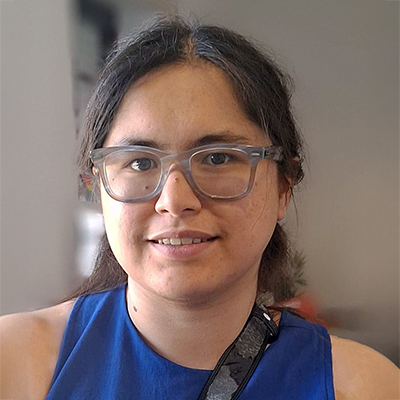
Melinda Dunn
Role at CATA: Co-Founder and Secretary of the General Assembly and actor
Before I went to the group that would eventually inspire CATA, I had the worst luck with adaptive programming. Worried the new group would repeat the bad luck, I made a good luck charm. I think it gave me good luck – everyone was friendly and kind, and I got roles that played to my strengths.
Member Spotlight: Melinda Dunn
CATA: What first drew you to theatre, and how/why did you find your way to CATA?
Melinda: Although my family was always into theatre, I was really drawn into it when Mom told me about an adaptive theatre group. I love and miss that group. When I told Alecia Ramsey about it, she liked the idea. And thus, the seed was planted.
CATA: Can you share a favorite memory from a rehearsal, show, or behind-the-scenes moment?
Melinda: When I was 12, I decided to give a babysitting club at Walt Disney World one last hurrah. I didn’t like writing and disliked my English teacher at the time, but I was rewriting A Christmas Carol. I got a few kids interested in doing a show, and we had a blast. After that, I realised that writing could be fun, and it pushed my grades from almost failing to getting a B and then an A in eighth grade.
CATA: What is a behind-the-scenes skill or task you do that people may not realize?
Melinda: I come up with ideas for plays. I’ve rewritten some current plays to be better or different. Some are original. After the play is written, I try to find a way to include my costume lady.
CATA: What does having a theatrical “safe space” mean to you, personally?
Melinda: It means people accepting you as you are, flaws, nerves, and all. It means the program facilitator takes the time to get to know you to cast you in the best roles. If you are the lead, you can help create the safe space by being a team captain and bringing out the best in the other actors.
CATA: If you could play any role or do any job in a dream production, what would it be?
Melinda: I would play Gabriella in High School Musical. However, there is a bad association with that, so it’ll be a few years before I do it. But I want to do it to take back my life when and only when I feel ready.
CATA: What is your favorite theatrical superstition or pre-show ritual?
Melinda: Before I went to the group that would eventually inspire CATA, I had the worst luck with adaptive programming. Worried the new group would repeat the bad luck, I made a good luck charm. I think it gave me good luck – everyone was friendly and kind, and I got roles that played to my strengths. I then signed up for another season. This is how the idea for CATA formed.
CATA: In one word, how would you describe the CATA family?
Melinda: Loving
Encore
From Ancient Roots to Thespians
The magic of theatre is thousands of years old, stretching back to ancient civilizations. Long before grand amphitheaters were constructed, the ancient Egyptians staged some of the earliest recorded theatrical performances. These took the form of passion plays, pageants, and religious dramas that blended music, dance, and storytelling to celebrate their gods and the cycles of life.
Centuries later, the ancient Greeks took these performance roots and transformed them into the structured art form we recognize today. They established formal playwriting and acting competitions during festivals honoring Dionysus, the god of theatre and wine. Performers wore large, expressive masks to project emotions across massive outdoor stone theaters, laying the foundational storytelling techniques that still influence modern stages.
During one of these Greek festivals around 534 BC, a singer named Thespis changed history forever. Instead of merely reciting lines as part of a large chorus, he stepped forward, spoke directly to the audience, and engaged in dialogue with the chorus as an individual character. By stepping out of the crowd, he became the world’s very first actor.
Did You Know?
Because of Thespis and his historic step forward, actors worldwide are still proudly called thespians today!
Join the Conversation
Do you have a story for Center Stage, an idea for The Main Act, or some trivia for Encore? Reach out to us at info@cata-theatre.com or call/text us at +351 925 563 331.
See you next month at The CATA Corner!